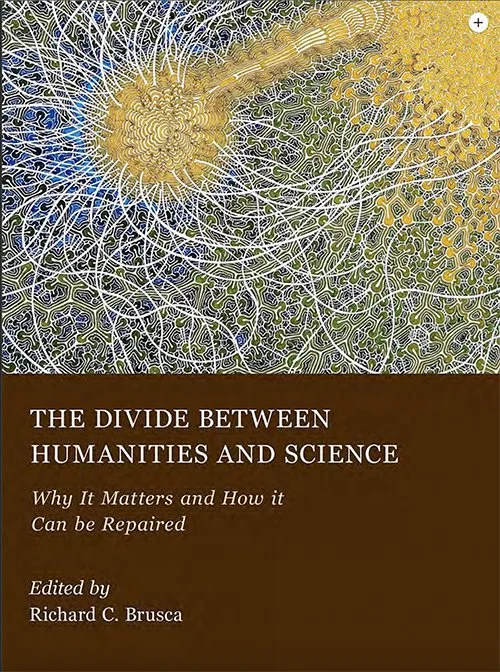
I had such a blast writing an essay for “The Divide Between Humanities and Science: Why It Matters and How it Can be Repaired” out now through Ethics Press. Conceived and edited by Richard C. Brusca PhD, it posits that the humanities and sciences have become too siloed and would benefit from some cross-pollination. Each chapter is written by people who bridge the humanities/science divide through the work that they do. My chapter, “Art + Science: Imperishable Change That Renovates the World “ allowed me to reflect on why I think this relationship is so important, how it’s played out in my work, and moments in my life that led me to this perspective.
My work, especially three of my site specific installations, feature prominently in this book alongside works by Sarah Sze and Rei Naito.
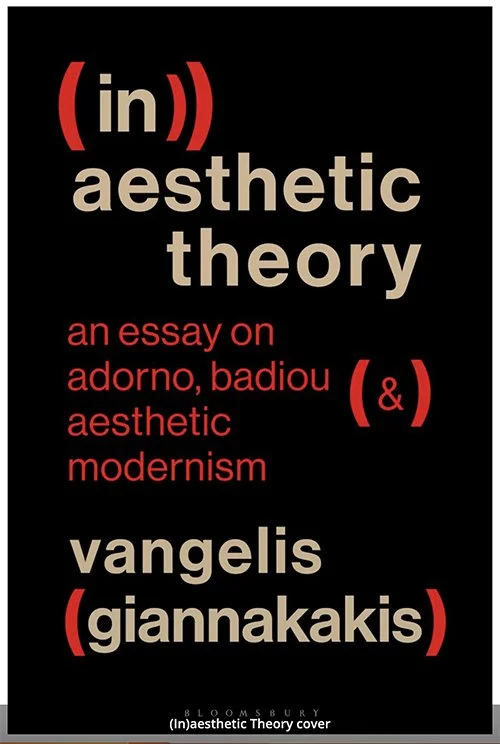
“A reckoning with the radicalisation of modernist aesthetics that took hold in the mid-twentieth century, (In)aesthetic Theory illuminates the limits of aesthetic presentation by bringing Theodor Adorno and Alain Badiou's divergent philosophies of art into critical proximity.
Both theorists uncover moments in which art ceases to represent and begins to insist – where its truth is not stated outright but intimated in a gesture beyond the world as given. Their respective frameworks suggest that aesthetic experience can open an affective breach in which the reifying impulse of cognition is negated, and that which otherwise eludes the regime of established appearances is encountered obliquely. This shared structural insight anchors this book's central hypothesis: that art's power to produce truth lies precisely in this zone of interruption, of failure, of withdrawal, and vanishing intensity.
Combining original theory with historically grounded comparative commentary, the text reflects on presence and absence, history and memory, politics and art, entropy and decay. With it, Vangelis Giannakakis offers a vitally current interpretation of aesthetic modernism.”
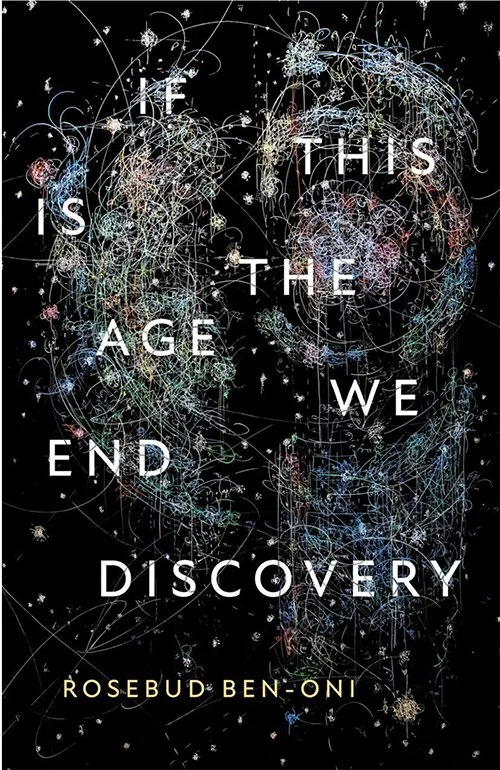
Cover image for award winning poet Rosebud Ben-Oni’s book.
“Ben-Oni draws on the odd properties of supersymmetry to create a dexterous collection of electric lyrics that defies conventions of science and syllabics alike. … An astonishing work for adventurous readers intrigued by science and literature.”
—Diego Báez